Amending patent claims during prosecution is not always the right move. Learn when to argue rejections, when to narrow, and what prosecution history estoppel means for enforcement.
Most patent prosecution timelines are longer than the USPTO estimates suggest. Here's what examiners see that determines when your case actually moves.
A 35 USC 103 rejection establishes a prima facie case of obviousness based on combined prior art. Understanding how examiners build that case is the first step to rebutting it effectively
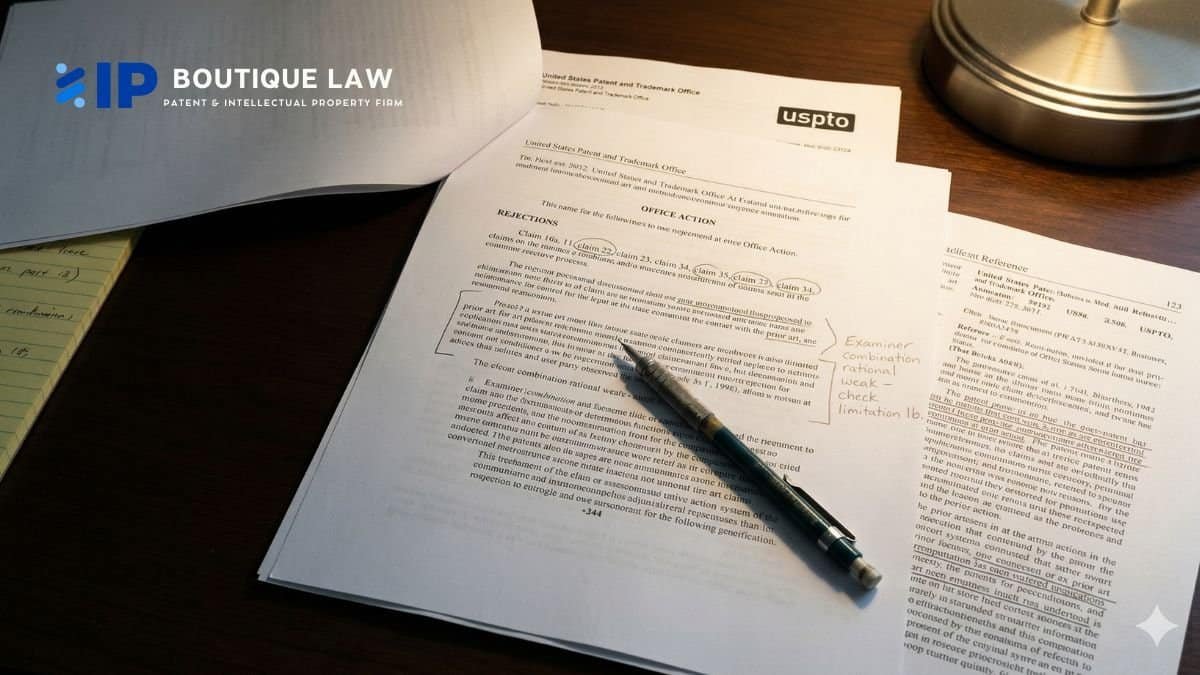
A patent office action is the USPTO examiner's written assessment of your application — what's rejected, why, and what needs to change. This article explains every type, from restriction requirements to final office actions, with examiner-side context.
A patent office action is a rejection of your current claims, not your invention. This guide covers non-final, final, and restriction requirements — with response deadlines, extension fee tables, and the argument strategies that actually move examiners.